

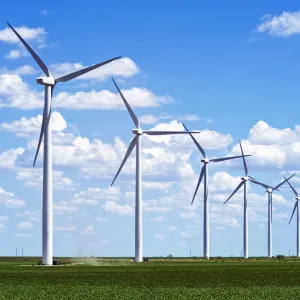
Wind energy is energy obtained directly from the force of the wind. It is one of the most promising forms of energy given its extremely low environmental impact. On average, a windmill prevents the emission of more than 6,300 tons of CO2 into the atmosphere each year , which is an invaluable aid in the fight against the greenhouse effect and the resulting climate change.
However, wind energy also has some disadvantages. In the following article from Green Ecology we will weigh up the advantages and disadvantages of wind energy .
What is wind energy?
As we have indicated before, wind energy is the energy that is produced by the movement and force of the wind . Currently, it is one of the energies with the most future, since it has a very low environmental impact compared to other energies.
It is estimated that, in the coming years, wind energy could represent up to 20% of energy production in Spain , which is a clear example of how this energy represents a niche of trust for both energy companies and public bodies.
However, despite the many advantages of this energy, it also has a number of disadvantages that make it necessary to continue researching until we can implement wind technology that is even better and more efficient. In fact, today we can even make homemade windmills.
Find out more about Windmills: how to make homemade wind energy in this post that we suggest or take a look at the video below about renewable and non-renewable energies.
How wind energy works
We know that wind power works thanks to the wind, but how is all this energy generated? In order for everything to work, we first need electric turbines or wind turbines , commonly known as the huge 50-meter windmills that we find on secondary roads.
They are usually grouped in wind farms and are located in places where there is a lot of wind, otherwise they would not work. Although, to the surprise of many, these windmills can also be located under the sea. When the wind moves the blades, connected to a rotor that multiplies the speed of rotation to thousands of revolutions per minute.
From here, the generated energy is converted into electrical energy by a generator . It passes through the tower to the substation and continues until it reaches an electrical network that can distribute it.
Now that we have explained what this energy is and how it works, read on to discover the advantages and disadvantages of wind energy.
Advantages of wind energy
Although it may not seem like it, wind energy has advantages and disadvantages that you may not have known about. Even so, we can roughly summarise that wind energy accounted for around 21.9% of total electricity production in Spain in 2021, a very beneficial figure. Therefore, some of its advantages are:
It is a renewable energy that is not depleted.
One of the first advantages of wind energy is that it is one of the renewable energies because wind is an inexhaustible resource. This means that the original source that produces the energy can always be counted on, which guarantees that its usefulness does not have an expiration date , as is the case with fossil fuels.
Do renewable energies pollute the environment? Find out the answer in this article that we suggest for you.
It is 100% clean energy
It is a completely clean energy. In fact, this is perhaps its main advantage when compared to other types of energy. Wind energy does not produce any type of waste , which means that its use does not contribute to the destruction of ecosystems or promote global warming.
It is a safe energy
Another advantage of wind energy is that it is one of the safest forms of energy available. As it does not produce polluting waste or pose a danger in the event of an accident, it is a completely safe form of energy.
It is an indigenous energy
This helps to promote energy independence, since, although there are countries with higher wind rates, they can be found all over the world . This allows for the creation of a local energy market and frees up the need to import energy from other economies.
It is an energy with ecological transport
The technology required to implement a wind farm allows it to be carried out in a simple and fairly effective way . It does not require many vehicles or pipes to transport it. In fact, if it takes longer than desired to build them today, it is usually due to bureaucratic and administrative issues.
It has little impact on the ground
Wind farms have a very small impact on the soil and its erosion. This is due both to the absence of polluting waste and to the fact that they take up little space compared to other types of energy facilities.
We leave you this article on The importance of soils from EcologíaVerde so you can learn more about the subject.
It is an energy that respects aquifers
Due to the absence of any type of contaminating residue, it does not alter the composition of the water in the area, which is a fundamental element when it comes to protecting local water reserves and the ecosystems linked to them.
If you want to know the importance of ecosystems , do not hesitate to read this post.
It is a very cheap energy
In fact, in some cases it is at the same price as coal and even nuclear energy. When a wind turbine reaches the end of its useful life, it is dismantled without leaving a significant impact on the environment due to the small square meters it occupies. Its production is flexible and the maintenance cost is practically non-existent.
It is also worth noting that wind energy creates jobs . In fact, places where wind farms are built experience a considerable reduction in local unemployment.
It is compatible with other activities
Wind energy is fully compatible with other activities such as agriculture and livestock farming , which means that it does not have a negative impact on the local economy as it does not require specialised labour in the area. This allows the areas where it is installed to continue developing their traditional activity while increasing their activity thanks to wind energy.
It is increasingly developing
In addition to all these benefits of wind energy, work is currently being done on locating more wind turbines at sea , where there is more wind and where there is less of a visual impact, which will provide a new boost to its development.
Financial resources are also being allocated to research and improving the efficiency of this type of energy, which will allow the advantages to be expanded in the future while solving the disadvantages that it still presents.
You can take a look at this other article on How we can harness wind energy , here.
Disadvantages of wind energy
In the previous section we have mentioned all the advantages of wind energy, except the following, which are its main disadvantages:
It depends on the weather
One of the first drawbacks of wind energy is that there is not always wind , or if there is, it may be slower, so it needs the support of other types of energy for those moments, whether polluting or clean energy.
There are speed problems
Wind turbines only work properly with wind gusts between 10 and 40 km/h . At lower speeds, the energy is not profitable and at higher speeds, it poses a physical risk to the structure, since the turbine would not be able to withstand it and damage would be caused to the structure. In this case, it would be necessary to modify the blades and disconnect the wind turbine.
It’s difficult to plan
There is a certain level of difficulty in planning due to the unpredictability of the wind . Thanks to meteorological models, this aspect has improved considerably, although it continues to be one of the drawbacks that it poses.
Furthermore, since wind farms are located far from consumption points, they require an energy transport infrastructure , which leads to energy loss and the need to install the transport infrastructure.
It is not possible to store it
Another disadvantage of wind energy is that it cannot be stored, but must be consumed immediately after it is produced. This means that it cannot offer a complete alternative to the use of other types of energy.
A large number of wind turbines is required
Since wind energy density is low , this requires a high number of wind turbines for it to be useful. In other words, although it is a cheap and easy energy source, a large number of wind turbines are needed to operate at the same time for it to be profitable.
It occupies large areas
The construction of wind farms has an aesthetic impact on the landscape, which sometimes causes discomfort among the local population, since, in addition, being so large, the wind turbines have to be separated.
In addition, we also find that wind turbines emit noise . However, it is true that this disadvantage has been reduced to a minimum thanks to the advances in engineering that have been applied to new turbines.
It has environmental impact
Another serious drawback of wind power is that, when in operation, the blades of wind turbines pose a danger to local bird life , which, if they collide with them during flight, often die from the impact. The most affected species are bats.
Examples of wind energy
Now that we have explained in detail what wind energy is, how it works and what its advantages and disadvantages are, we cannot forget to mention some of the most outstanding examples of this type of renewable energy. Therefore, some examples of wind energy are:
- Sailboats for moving around on water.
- Traditional windmills .
- Homemade wind turbines to supply electricity to a home.
- Land-based wind turbines that produce electricity.
- Offshore wind farms that generate electricity for an entire region.